
by 1-855-MINI-SPLITS | Ductless HVAC
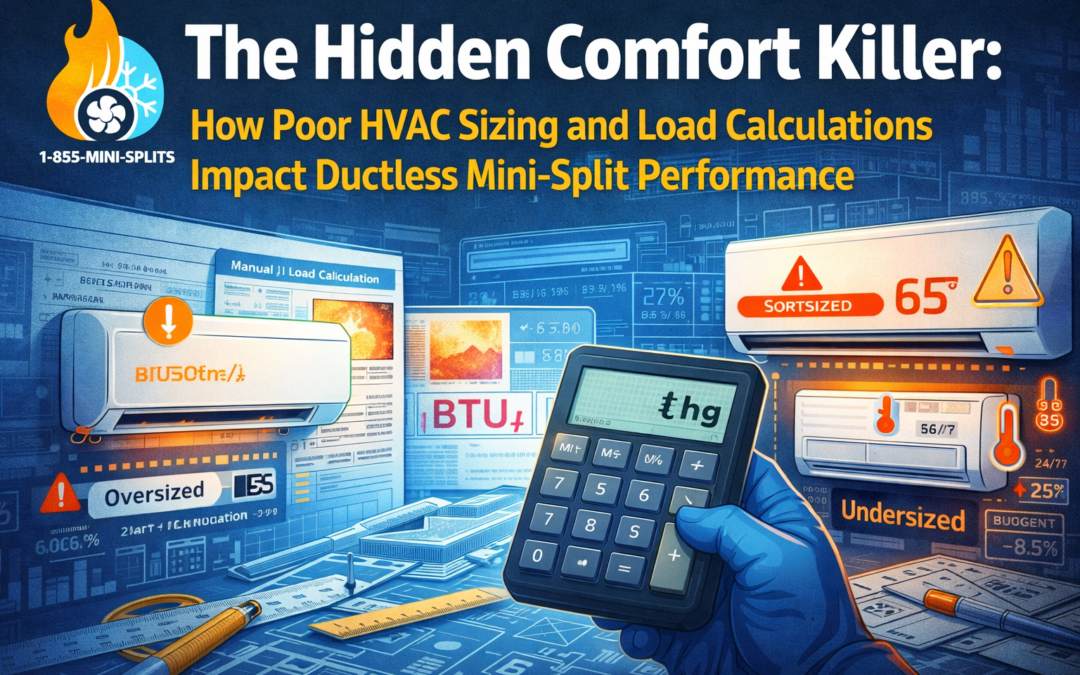
When homeowners think about installing a ductless mini-split system, they often focus on efficiency ratings, brand names, or how sleek the wall-mounted unit will look in their space. What almost never gets discussed—but has a massive impact on comfort, performance, and long-term cost—is system sizing and load calculation.
In fact, improper sizing is one of the most common reasons homeowners end up disappointed with an otherwise excellent ductless HVAC system.
At 1-855-MINI-SPLITS, we’ve seen it firsthand: systems that should have been flawless end up short-cycling, struggling in extreme temperatures, or failing to deliver the comfort they promised—all because the system wasn’t sized correctly from the start.
Let’s break down why sizing matters, what goes wrong when it’s ignored, and how to make sure your ductless mini-split is designed for real-world performance.
What Does “HVAC Sizing” Actually Mean?
HVAC sizing has nothing to do with physical size. It refers to how much heating and cooling capacity a system can deliver, measured in BTUs (British Thermal Units).
A properly sized ductless mini-split must match:
- The square footage of the space
- Ceiling height
- Insulation quality
- Window size and orientation
- Sun exposure
- Air leakage
- Climate zone
- Number of occupants
- Appliance heat loads
This process is known as a Manual J load calculation, and skipping it is one of the most expensive mistakes a homeowner can make.
Why “Bigger Is Better” Is a Myth in HVAC
Many people assume oversizing a system is safer—more power must mean more comfort, right?
In reality, oversized ductless systems cause:
- Short cycling (frequent on/off operation)
- Poor humidity control
- Uneven temperatures
- Increased wear on components
- Higher energy bills
- Shortened system lifespan
A ductless mini-split that’s too powerful cools or heats the room too quickly, never running long enough to properly dehumidify or stabilize temperatures. The result is a space that feels clammy in summer and inconsistent in winter.
The Problems With Undersized Systems
Undersizing is just as problematic.
An undersized ductless system:
- Runs constantly
- Struggles during extreme heat or cold
- Never quite reaches the desired temperature
- Experiences premature component stress
- Consumes more electricity over time
Homeowners often mistake this for “inefficient equipment” when the real issue is poor planning—not the system itself.
Zoned Comfort Makes Sizing Even More Important
One of the biggest advantages of ductless mini-splits is zoned comfort—the ability to independently control temperatures in different rooms or areas.
But zoning only works when:
- Each indoor unit is sized correctly
- The outdoor condenser can support the combined load
- Line-set distances are properly planned
- Usage patterns are considered
Improper zoning design can overload the outdoor unit or leave certain rooms uncomfortable year-round.
Climate Matters More Than Most People Realize
A system designed for mild coastal weather won’t perform the same in:
- Cold northern winters
- Hot, humid southern summers
- High-altitude environments
Cold-climate ductless systems require:
- Enhanced inverter technology
- Low-ambient heating performance
- Proper defrost cycles
- Correct capacity planning at low outdoor temperatures
At 1-855-MINI-SPLITS, we help ensure systems are designed for your actual climate, not generic conditions.
Why DIY Sizing Charts Fall Short
Online BTU calculators can be helpful starting points—but they’re not substitutes for professional evaluation.
They often fail to account for:
- Older construction methods
- Additions and renovations
- Poor insulation
- Air infiltration
- Multi-level heat migration
- Unique room usage
That’s why working with knowledgeable professionals makes such a difference.
How 1-855-MINI-SPLITS Helps Get It Right
When you contact 1-855-MINI-SPLITS, we focus on design before installation.
We help:
- Match the right BTU capacity to each space
- Ensure outdoor units are properly paired
- Coordinate with certified HVAC technicians
- Prevent overspending on unnecessary capacity
- Avoid performance issues years down the road
The result? A ductless mini-split system that:
- Runs longer and smoother
- Delivers consistent comfort
- Uses less energy
- Lasts longer
- Performs exactly as intended
Comfort Isn’t Just About the Equipment
A ductless mini-split system is only as good as the planning behind it.
When sizing, design, and real-world conditions are aligned, ductless HVAC systems deliver the quiet, efficient, year-round comfort they’re known for.
And when they’re not? Even the best equipment can underperform.
That’s why the smartest investment isn’t just buying a system—it’s getting it designed right from day one.
If you’re considering ductless heating and cooling, start with a conversation.
Call 1-855-MINI-SPLITS and let experience guide the process.