
by 1-855-MINI-SPLITS | Ductless HVAC
When most homeowners think about comfort, they think in numbers—68°, 72°, maybe 75° on a hot day. But temperature alone doesn’t define how a space actually feels. The real comfort culprit hiding in plain sight is humidity.
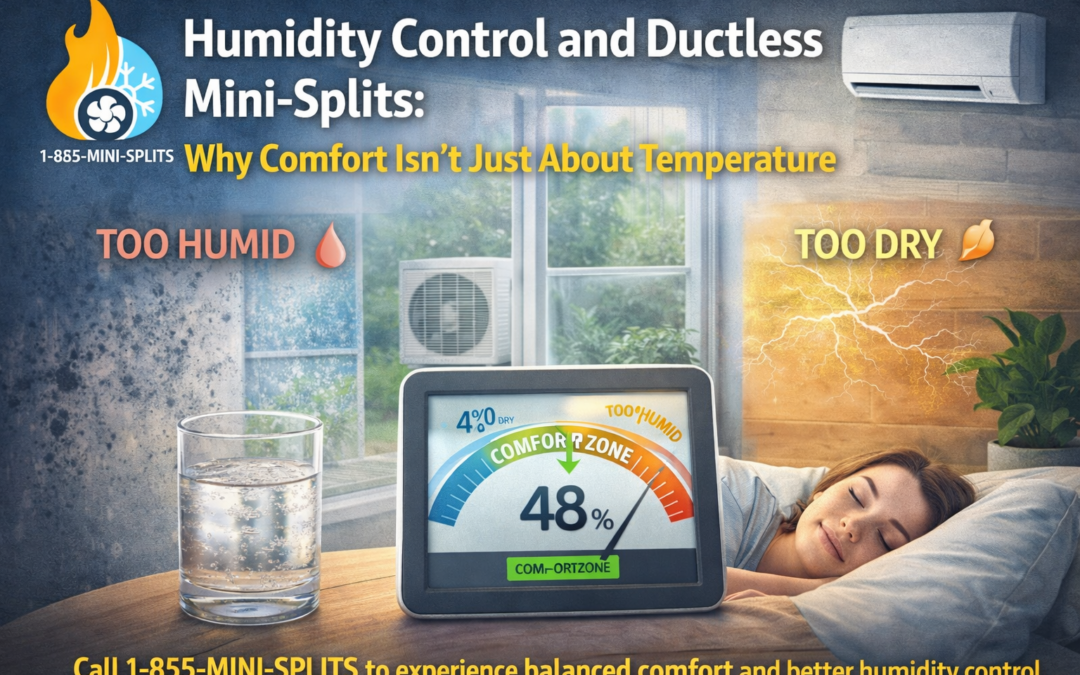
Too much moisture in the air can make a room feel sticky, heavy, and uncomfortable—even when the thermostat says everything is fine. Too little humidity can leave your skin dry, your sinuses irritated, and your home feeling lifeless.
Ductless mini-split systems don’t just manage temperature—they play a powerful role in humidity control, and understanding how they do it explains why so many homeowners describe ductless comfort as “different” in the best possible way.
What Is Humidity—and Why Does It Matter?
Humidity refers to the amount of moisture in the air. Indoor comfort typically falls within a 30–50% relative humidity range.
When humidity is too high:
- Rooms feel warmer than they actually are
- Sweat doesn’t evaporate efficiently
- Mold and mildew risks increase
- Indoor air quality declines
When humidity is too low:
- Skin and eyes become dry
- Respiratory irritation increases
- Wood floors and furniture can crack or warp
- Static electricity becomes common
True comfort requires balancing temperature and moisture together.
Why Traditional HVAC Struggles With Humidity
Conventional HVAC systems are designed primarily for sensible cooling (temperature reduction), not latent cooling (moisture removal).
Common issues include:
- Short cycling that prevents proper dehumidification
- Ductwork that reintroduces moisture
- Oversized systems that cool too quickly
- Poor airflow balance between rooms
As a result, homeowners often lower the thermostat unnecessarily just to feel comfortable—driving up energy costs without actually fixing the problem.
How Ductless Mini-Splits Handle Humidity Differently
Ductless mini-split systems are exceptionally good at humidity control because of how they operate.
Key advantages include:
- Longer run times that allow moisture removal
- Variable-speed compressors that avoid short cycling
- No ductwork, eliminating condensation issues inside ducts
- Precision control for individual zones
- Dedicated dry or dehumidification modes on many systems
Instead of blasting cold air and shutting off, ductless systems maintain steady operation—quietly pulling moisture from the air while keeping temperatures stable.
The Science Behind Latent vs. Sensible Cooling
HVAC performance is divided into two types of load:
- Sensible load: temperature change
- Latent load: moisture removal
Ductless mini-splits excel at managing both simultaneously, which is why homes often feel more comfortable at higher thermostat settings.
Many homeowners discover they can raise their setpoint by 2–4 degrees and still feel cooler—simply because the humidity is under control.
Humidity Control Means Better Health and Air Quality
Proper humidity levels don’t just improve comfort—they support a healthier indoor environment.
Balanced humidity helps:
- Reduce mold and mildew growth
- Minimize dust mites
- Improve respiratory comfort
- Protect wood surfaces and furnishings
- Enhance overall indoor air quality
For households with allergies, asthma, or sensitivity to moisture, ductless systems can make a noticeable difference.
Zoned Humidity Control: A Hidden Advantage
Because ductless systems offer zoned operation, humidity control becomes more precise.
Different rooms often have different moisture profiles:
- Kitchens and bathrooms
- Basements
- Bedrooms
- Home offices
With ductless zoning, you’re not forcing the entire home to follow one humidity pattern. Each space can be conditioned based on how it’s actually used.
Why Proper Sizing and Design Still Matter
Humidity control depends on correct system design.
Improper sizing can:
- Reduce moisture removal
- Cause short cycling
- Limit latent capacity
That’s why working with experienced professionals—like those coordinated through 1-855-MINI-SPLITS—ensures your system is designed for real comfort, not just temperature control.
Comfort You Can Feel, Not Just Measure
When humidity is balanced, everything changes:
- Rooms feel cooler in summer
- Heating feels gentler in winter
- Air feels lighter and fresher
- Comfort becomes consistent
It’s the kind of comfort you don’t think about—because it just feels right.
The Moisture Advantage of Ductless HVAC
Ductless mini-split systems redefine comfort by addressing what traditional systems often ignore. Temperature matters—but humidity completes the picture.
If your home feels uncomfortable even when the thermostat says it shouldn’t, humidity may be the missing piece.
Call 1-855-MINI-SPLITS to learn how ductless HVAC systems deliver true, balanced comfort—season after season.