
by 1-855-MINI-SPLITS | Ductless HVAC
When people think about installing a ductless mini-split system, they usually picture the indoor unit on the wall or the outdoor condenser sitting quietly beside the home. What often gets overlooked—but is just as critical to system performance and safety—is the electrical infrastructure behind the scenes.
Ductless mini-splits are highly efficient, but they are still powerful mechanical systems that rely on proper electrical design. Understanding how power requirements work can help homeowners avoid installation delays, unexpected costs, and long-term reliability issues.
At 1-855-MINI-SPLITS, we believe informed homeowners make better decisions. Here’s what you need to know before installing a ductless mini-split system.
Why Electrical Planning Matters for Ductless HVAC
Unlike traditional window units or plug-in appliances, most ductless mini-split systems are hardwired into your home’s electrical panel. That means the system must be supported by:
- Adequate electrical capacity
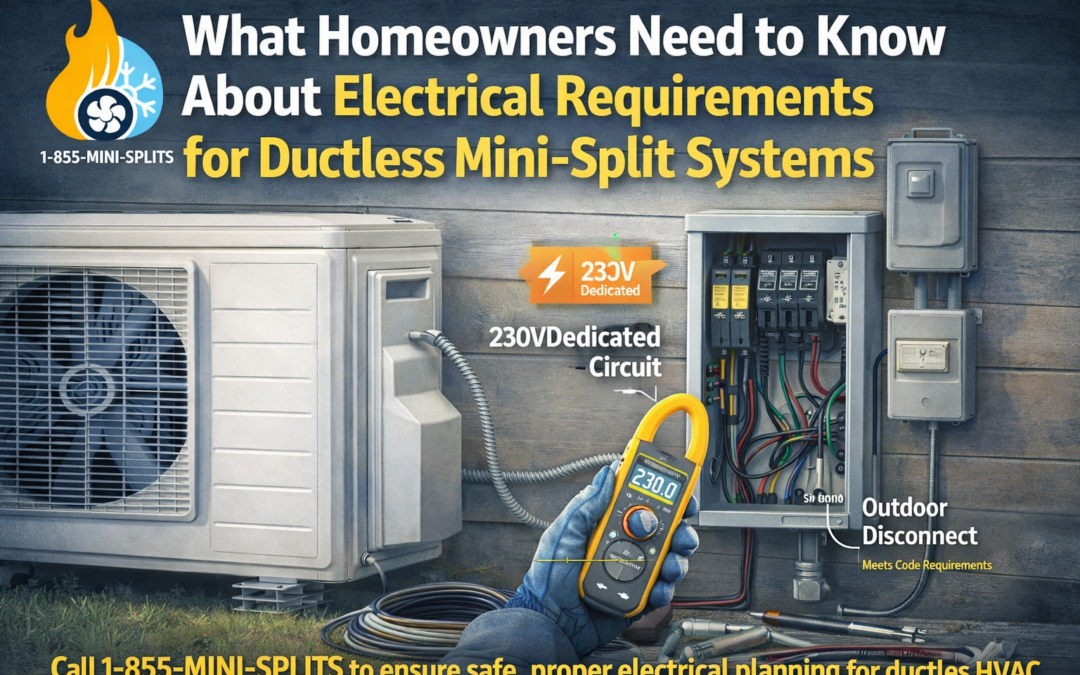
- Dedicated circuits
- Proper breaker sizing
- Code-compliant disconnects
Skipping or rushing this step can lead to nuisance breaker trips, voltage issues, or unsafe conditions—none of which are acceptable for a long-term HVAC solution.
Typical Power Requirements for Mini-Split Systems
Ductless mini-splits come in a wide range of capacities, and electrical needs vary accordingly.
Most systems fall into these general categories:
- Single-zone systems: Often require 115V or 230V
- Multi-zone systems: Typically require 230V
- Higher-capacity systems: Require dedicated breakers and higher amperage
Even energy-efficient inverter-driven systems still require stable power delivery to perform correctly.
Dedicated Circuits: Not Optional
One of the most important electrical rules for ductless mini-splits is the use of dedicated circuits.
A dedicated circuit:
- Serves only the mini-split system
- Prevents overload from other appliances
- Reduces electrical noise and interference
- Improves system longevity
Sharing circuits with outlets, lighting, or other equipment can lead to unpredictable operation and premature wear on the system.
Breaker Size and Wire Gauge: Getting the Details Right
Each ductless system manufacturer specifies:
- Minimum and maximum breaker size
- Required wire gauge
- Disconnect requirements
Using the wrong breaker size or wire gauge can:
- Void manufacturer warranties
- Create overheating risks
- Cause voltage drop
- Reduce system efficiency
This is why certified HVAC technicians and licensed electricians are critical partners in any ductless installation.
Electrical Panel Capacity: Is an Upgrade Needed?
In some homes—especially older properties—the existing electrical panel may not have enough capacity to support a new ductless system.
Signs an upgrade may be needed include:
- Panels with limited breaker space
- 100-amp service in larger homes
- Frequent breaker trips
- Outdated or obsolete panel designs
While a panel upgrade isn’t always required, identifying this early helps avoid surprises during installation.
Outdoor Disconnects and Safety Codes
Most local electrical codes require an outdoor disconnect within sight of the condenser unit. This allows technicians to safely service the system without shutting down power to the entire home.
This safety feature:
- Protects technicians
- Improves serviceability
- Keeps installations code-compliant
Local code requirements vary, which is why working with professionals familiar with regional regulations matters.
How Electrical Quality Affects System Performance
Stable voltage and clean electrical supply help inverter-driven mini-splits operate at peak efficiency.
Poor electrical conditions can lead to:
- Erratic compressor behavior
- Sensor errors
- Communication faults between indoor and outdoor units
- Reduced system lifespan
Proper electrical planning isn’t just about safety—it directly impacts comfort and reliability.
Why DIY Electrical Work Is a Risk
While some homeowners are comfortable with basic home projects, mini-split electrical work should never be treated as a DIY task.
Improper wiring can:
- Violate electrical codes
- Create fire hazards
- Cause equipment failure
- Eliminate warranty coverage
At 1-855-MINI-SPLITS, we help ensure your system is installed correctly from both an HVAC and electrical standpoint.
How 1-855-MINI-SPLITS Simplifies the Process
When you call 1-855-MINI-SPLITS, we help coordinate:
- Proper system selection
- Electrical requirement review
- Certified HVAC installation
- Local code considerations
Our goal is to eliminate guesswork and ensure your ductless mini-split system is supported by the infrastructure it needs to perform flawlessly for years.
A Strong System Starts With Strong Power
Ductless mini-split systems are among the most efficient and reliable HVAC solutions available—but only when supported by proper electrical design.
Understanding power requirements ahead of time leads to:
- Smoother installations
- Lower long-term costs
- Better system performance
- Peace of mind
If you’re planning a ductless HVAC project, start with the right foundation.
Call 1-855-MINI-SPLITS and let expertise guide every step.